SEO Reports are structured performance documents that communicate a website's organic search progress to clients — covering keyword rankings, organic traffic, backlink health, and technical issues over a defined period. For agencies, the challenge is not finding the data; it is assembling it efficiently, presenting it clearly, and delivering it consistently under the agency's brand. Agency Dashboard's reporting platform automates every step — connecting all data sources, building branded reports, and sending them to clients on schedule without manual effort from the agency team.
What Are SEO Reports — and Why Do They Matter for Client Retention?
SEO reports are structured documents that track and communicate the performance of a website's organic search presence over a defined time period. They consolidate data from multiple sources — rank tracking, Google Analytics traffic data, backlink monitoring, and technical health checks — into a single narrative that shows clients what has changed, why it matters, and what happens next. A strong report does not just present numbers; it tells the story of a campaign in motion.
For agencies, SEO reports serve a function that goes well beyond data delivery. They are the primary proof of value — the monthly evidence that the agency's work is producing measurable outcomes. An agency that consistently delivers clear, timely, well-structured reports retains clients longer than one that relies on verbal updates and periodic check-ins. The report is where trust is built or eroded, month after month, regardless of how strong the underlying campaign performance is.
The problem most agencies encounter is not a shortage of data — it is an excess of it, scattered across multiple platforms with no consistent assembly process. A proper SEO Reporting Tool consolidates every data source into one automated environment. SEO Reporting that requires logging into rank tracking, Google Analytics, backlink tools, and audit platforms separately — then manually compiling the data into a coherent document — is a workflow that does not scale.
Agencies that produce the strongest campaign results often lose clients to agencies with weaker results but superior reporting. A client who receives a clear, well-structured SEO performance report every month feels informed and confident. A client who receives sporadic updates — even when rankings are improving — feels neglected. Consistency of reporting communication is a retention lever that operates independently of ranking performance.
What Every SEO Report Must Include
A well-structured SEO Report Template is the foundation of any scalable reporting workflow. When the template defines what every report covers, account managers can produce consistent client deliverables regardless of who handles the account — and clients receive the same quality of information every month without variation.
Every high-performing SEO report should include: an executive summary, keyword ranking changes with trend data, organic traffic performance from Google Analytics, backlink profile health and new acquisition, technical SEO audit status, SERPs visibility overview, campaign progress against agreed objectives, and a clearly stated next-steps section. The executive summary and next-steps sections are the two most read sections by clients — they must be written in plain language with no platform jargon, connecting data movements to business outcomes the client cares about.
| Report Section | Data Source | What It Shows | Client Value |
|---|---|---|---|
| Executive Summary | All sources — written overview | Key wins, issues, and priorities this period | Instant understanding without reading everything |
| SEO Ranking Report | Rank tracker | Position changes per keyword vs. last period | Direct visibility of ranking progress |
| Organic Traffic | Google Analytics | Sessions, users, engagement from organic search | Business impact of ranking improvements |
| Backlink Profile | Backlink monitor | New links, lost links, referring domain count | Authority building progress |
| Technical SEO Audit | Site crawler | Errors, warnings, page speed, indexing status | Health assurance and issue prioritisation |
| SERPs Analysis | Rank tracker + SERP data | Featured snippet captures, local pack presence | Visibility beyond standard blue links |
| Campaign Progress | Internal project tracking | Deliverables completed vs. planned | Work accountability and pace visibility |
| Next Steps | Account manager written | Priorities for the coming reporting period | Forward-looking confidence |
Build separate SEO Report Template versions for each client tier — a concise 4-section template for clients who want top-line summaries, and a detailed 8-section template for clients who want full-depth data. Agency Dashboard's SEO Reporting Dashboard allows per-client template customisation so every report is structured to the stakeholder's preference without rebuilding from scratch each month.
The Four Data Layers in Every Strong SEO Report
A complete SEO analysis reports framework covers four interconnected data layers — each answering a different question about campaign performance. Understanding what each layer reveals, and how they connect, is what allows account managers to write authoritative executive summaries rather than just presenting numbers.
The SEO Rank Report is the section most clients turn to first — it shows where their target keywords appear in search results and how those positions changed since the last report. Agency Dashboard's SEO Ranking Report Software tracks positions daily for any set of keywords, showing movement with directional indicators that make gains and losses immediately readable without requiring clients to interpret raw position numbers. For agencies running multiple SEO campaigns simultaneously, this ranking data is centralised per client with no manual rank checks required.
Ranking improvements only matter if they drive traffic — and traffic only matters if it converts. The Google Analytics integration in Agency Dashboard pulls organic session data, new user acquisition, engagement rate, and conversion performance directly into the report, connecting ranking movements to the business outcomes clients care about. This layer transforms a ranking position table from "we went from position 8 to position 5 for this term" into "that ranking improvement drove 340 additional organic sessions with a 3.2% engagement rate." For Online SEO Report delivery, this is the section that makes the business case for continued investment.
"Clients do not buy keyword positions. They buy organic traffic, leads, and revenue. The SEO performance report that shows all three in one view is the one that never gets questioned at renewal time."
A website's backlink profile is one of the most important long-term signals in organic search — and one of the most frequently under-reported in agency deliverables. Including backlink data in every monthly report serves two purposes: it demonstrates the value of link-building activities that otherwise feel invisible to clients, and it provides early warning for toxic link accumulation that could damage rankings if left unaddressed. Agency Dashboard monitors referring domains, new and lost links, and domain authority metrics, presenting all of it in a section of the SEO Client Report that explains authority development over the campaign's lifetime.
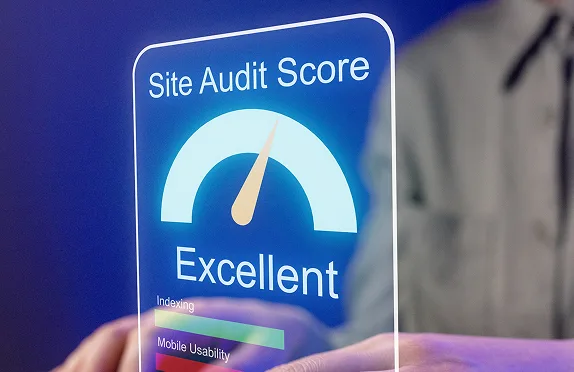
The technical SEO audit section is the most undervalued part of any client report — and the one that prevents expensive ranking drops before they happen. Agency Dashboard's SEO audit crawler runs automatically against the client's website and surfaces crawl errors, broken links, page speed issues, indexing problems, and mobile usability warnings. These findings appear in the monthly report as a health score with prioritised issue list — giving the client visibility into the maintenance work required to protect their ranking performance. Including this in SEO reports for clients positions the agency as proactive rather than reactive.
✅ With Technical Reporting
- Issues caught before they affect rankings
- Agency positioned as proactive partner
- Technical work justification always documented
⚠️ Without Technical Reporting
- Technical regressions surface as traffic drops
- No record of proactive issue resolution
- Clients question what technical work was done
White Label Reporting: Every Report Under Your Brand
A White Label SEO Report is a performance report produced entirely under the agency's own brand identity — logo, colours, domain, and report name — with no third-party platform branding visible anywhere in the client experience. The client receives a report that presents as a native agency product, not as an export from a software tool the agency subscribes to. This distinction matters for how clients perceive the agency's capability and expertise, and it is the standard that professional agencies operating at any scale should be delivering consistently.
Agency Dashboard's White Label Reports infrastructure covers every client-facing touchpoint: the SEO Reporting Dashboard the client logs into, the PDF reports delivered to their inbox, and the email notifications that announce new reports — all carrying the agency's logo, colour scheme, and custom domain. The client never sees Agency Dashboard's branding. They see the agency's brand, which reinforces the professional relationship at every interaction point.
The White Label Reporting Tool configuration in Agency Dashboard is a one-time setup that applies across all client accounts simultaneously. Set the agency's logo and brand colours once, configure the custom domain once, and every report produced for every client automatically carries that identity — without any per-report customisation work required from the team. This scales from 5 clients to 500 without any incremental branding effort.
When a client receives a branded report consistently each month, it signals organisational maturity and operational discipline — both trustworthiness-adjacent signals that affect how clients perceive the agency's expertise. An agency with inconsistent, unbranded reporting looks less authoritative than one with polished, consistently presented White Label Reports, even if the underlying campaign performance is identical.
SEO Report Automation: Eliminating the Monthly Assembly Problem
Once configured, an Automated SEO Report pulls live data from all connected sources, assembles it into the client's branded report template, and delivers it to the client's inbox on the configured schedule — without any manual steps from the agency team.
Agency Dashboard's reporting engine connects to all major data sources — rank tracking, Google Analytics, backlink monitoring, and the site audit crawler — pulling current data into each report automatically. The agency team's involvement shifts from data assembly to strategic review: they receive the automated draft, add written commentary that provides context and forward direction, and approve delivery.
| Task | Manual Process | With SEO Report Automation | Time Saved |
|---|---|---|---|
| Rank data collection | Log into rank tracker, export CSV per client | Auto-pulled from connected tracker | ~30 min → 0 |
| Traffic data pull | Open GA4, filter organic, screenshot or export | Auto-pulled from Google Analytics API | ~20 min → 0 |
| Backlink data | Open backlink tool, review changes, note key movements | Auto-populated backlink profile section | ~25 min → 0 |
| Technical audit | Run crawler, review issues, summarise findings | Auto-run crawler, issues auto-categorised | ~40 min → 0 |
| Report assembly | Build PDF or slide deck from collected data | Template auto-populated with live data | ~60 min → 0 |
| Delivery | Email PDF to client manually | Auto-sent on configured schedule | ~10 min → 0 |
| Account manager role | All of the above | Review draft, add commentary, approve | ~3 hrs → 20 min |
At 20 clients, manual reporting consumes approximately 60–80 hours per month — the equivalent of nearly two full working weeks every month spent on administrative assembly rather than strategy. SEO Report Automation through Agency Dashboard reduces that to approximately 7 hours for the same portfolio: 20 minutes of review and commentary per client. That reclaimed time goes directly into the campaign work that improves rankings.
Building a Scalable SEO Reporting Workflow in Agency Dashboard
A five-phase setup process — from connecting data sources to delivering automated, branded reports to every client on schedule.
Connect All Data Sources
Set up Agency Dashboard's reporting platform by connecting each client's data sources: Google Analytics for organic traffic, rank tracking for keyword positions, backlink monitoring for profile health, and the site audit crawler for technical health. Each connection is authenticated once per client via API — after setup, data flows automatically without any manual exports. For agencies managing 20+ clients, this upfront connection work is the investment that eliminates 60+ hours of monthly manual data assembly from that point forward.
Configure the White Label Brand Settings
Before building any client reports, configure Agency Dashboard's white label settings: upload the agency logo, set brand colours, and configure the custom domain for the client portal. This single configuration step applies across every client account and every report produced from that point forward. All White Label Reports delivered through the platform will carry the agency's identity — not Agency Dashboard's — at every touchpoint the client encounters.
Build the Report Template Per Client Tier
Configure the SEO Report Template for each client tier — selecting which sections appear, in what order, and at what level of detail. A C-suite stakeholder at an enterprise client needs a different report structure than a marketing manager at a small business. Agency Dashboard's template builder allows this customisation without rebuilding from scratch each time — create two or three tier templates once, then apply the appropriate template when onboarding each new client.
Schedule Automated Delivery
Configure the delivery schedule for each client's Automated SEO Report — monthly for the full performance report, weekly for SEO Ranking Report updates if the client has active campaigns with high-frequency keyword movements. Set the delivery day and time to arrive before the client's regular review call — so the data is in their inbox before the conversation, not after. Agency Dashboard handles assembly, formatting, and delivery on the configured schedule without any further input from the team once the automation is live.
Add Commentary and Approve Each Report
When the automated draft generates, the account manager receives a review notification. Their task is to add two sections that no automation can produce: the executive summary that contextualises the data in plain language, and the next-steps section that states the campaign priorities for the coming period. These two written sections are where the agency's expertise is most visible and most valued. Once the commentary is added, approve the report for delivery — the platform handles everything else. Connect this to Agency Dashboard's keyword research tools to inform the next-steps section with data on emerging opportunities.
Start Sending Automated, White Label SEO Reports Today
Agency Dashboard connects to all your data sources, builds branded reports automatically, and delivers them to clients on schedule — freeing your team from manual assembly and ensuring every client receives a consistent, professional report every month.
Frequently Asked Questions
A complete set of SEO Reports for Clients should cover an executive summary, keyword ranking changes with movement indicators, organic traffic data from Google Analytics, backlink profile health, technical SEO audit findings, SERPs visibility metrics, and a next-steps section written by the account manager. The depth of each section should match the client's seniority and technical familiarity — C-suite stakeholders want business-impact language; marketing managers want data depth. Agency Dashboard's template builder allows per-client section customisation with no manual rebuild required.
A White Label SEO Report is a branded performance report produced under the agency's own logo, colours, and domain — with no third-party platform branding visible to the client. Agency Dashboard's white label reporting infrastructure covers every client-facing touchpoint: the live SEO Reporting Dashboard, the PDF reports, and delivery emails. Configuration is a one-time setup that applies automatically across all client accounts. Visit agencydashboard.io/seo-report for full details.
SEO Report Automation connects to data sources via API — rank tracking, Google Analytics, backlink monitoring, and site audit — then automatically assembles that live data into a branded report template on a configured schedule and delivers it to client inboxes without manual intervention. The agency team's role shifts from data assembly to strategic review: they add written commentary to the automated draft and approve delivery. This reduces monthly reporting time from 3–4 hours per client to approximately 20 minutes — a 90%+ time saving for most agencies.
An SEO Reporting Dashboard is a live, visual interface that displays a client's organic search performance metrics — rankings, organic traffic, backlink health, and technical status — updated automatically from connected data sources. It gives clients self-service access to their performance data between scheduled report deliveries, reducing status enquiry emails to the agency team. Agency Dashboard's SEO Reporting Dashboard is fully white labelled — clients access it through the agency's branded portal, with no third-party platform branding visible.
Most agencies send a comprehensive monthly report covering all performance layers, supplemented by weekly SEO Ranking Report updates for clients with active campaigns or high-value keyword monitoring requirements. Agency Dashboard supports both cadences through its automation infrastructure — configure the monthly full report and the weekly ranking update independently, and both run automatically without separate manual effort. Clients receive consistent communication at their preferred frequency without any incremental work from the agency team.
SEO Ranking Report Software tracks keyword positions in search engine results on a regular cadence and presents position movement data in formatted, client-ready reports. Agency Dashboard's SEO Ranking Report Software tracks positions daily for any keyword set, shows movement with directional indicators, supports local and national rank separation, and includes competitor ranking comparison — all integrated into the same automated report that covers backlinks, traffic, and technical health data.
An SEO audit is a point-in-time diagnostic — a thorough assessment of the website's technical health, on-page optimisation, and structural issues at a specific moment in time. Ongoing SEO Reporting is a continuous tracking process that monitors how performance evolves over successive campaign periods. Both serve different functions: the technical SEO audit identifies what needs fixing; the ongoing report tracks whether those fixes are producing the expected ranking improvements. Agency Dashboard provides both — automated audit crawls that flag new technical issues, and the full reporting stack that tracks performance progress over time.
Agency Dashboard is built specifically for agencies — combining every data layer needed for complete SEO Reports (rankings, Google Analytics traffic, backlink profile, technical audit) into a single automated, white label reporting environment. Unlike general analytics platforms, it is designed around multi-client workflows: one workspace for all clients, fully branded output for every client, and automated delivery that scales from 5 clients to 500 without adding reporting overhead. Start with a free trial at agencydashboard.io.

Table of Contents
Recent Posts

Uptime Monitoring: Why Every Agency and Business Needs It in 2026

How to Write SEO Blog Posts That Rank and Boost Organic Rankings
SEO Content Grader: How to Score Content Before It Goes Live